This post may contain affiliate links. Please read our privacy policy for additional information.
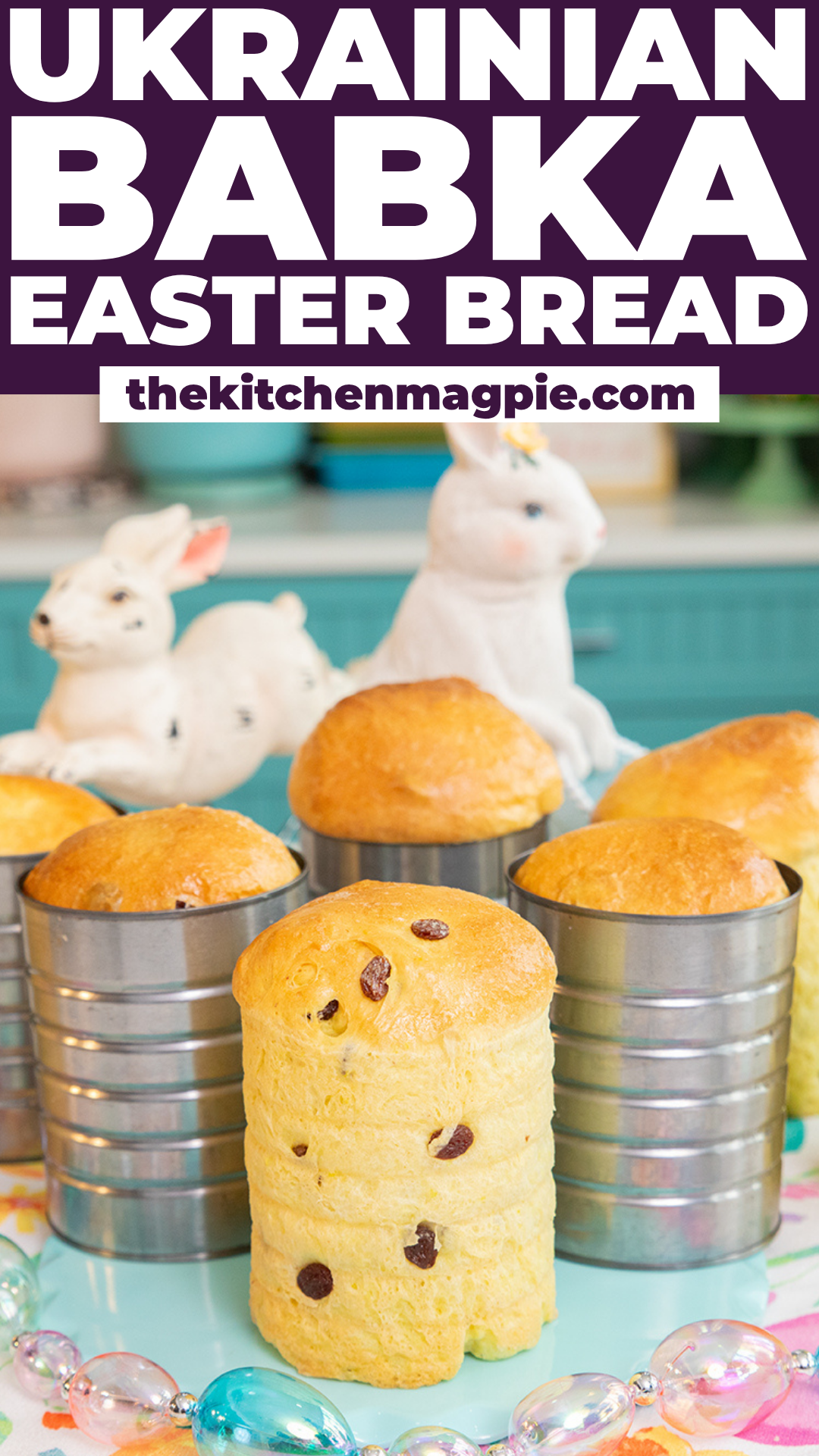
Easter Bread, or Ukrainian Babka, is one of my household’s most beloved Easter traditions. I come from a Ukrainian family, and my grandmothers would make Babka every Easter. When my Grandma wasn’t around to make it, my Mom would take over. I have been making Easter Bread since I had my children and have taught them the tradition.
Karlynn’s Recipe Rundown :
Ukrainian Babka (Easter Bread)
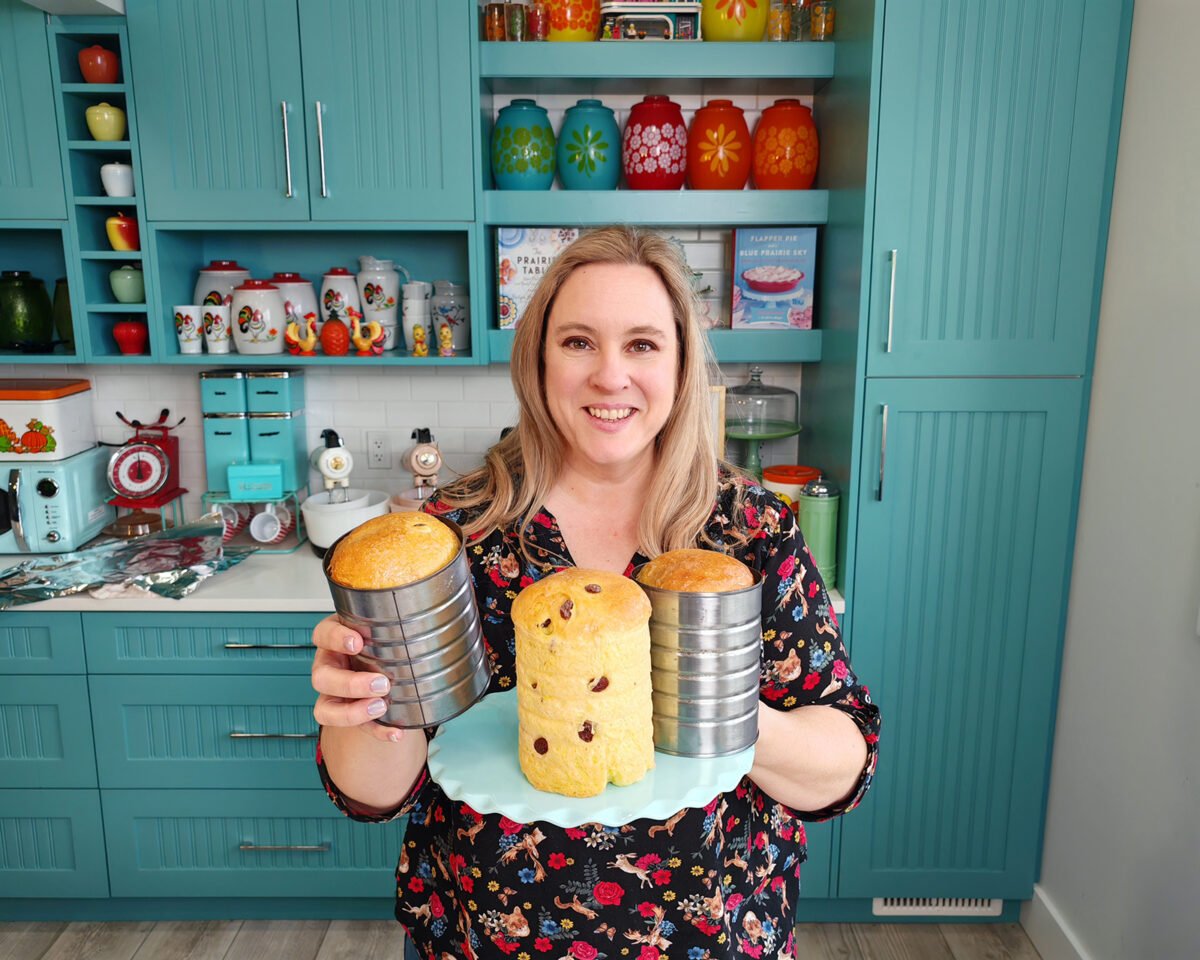
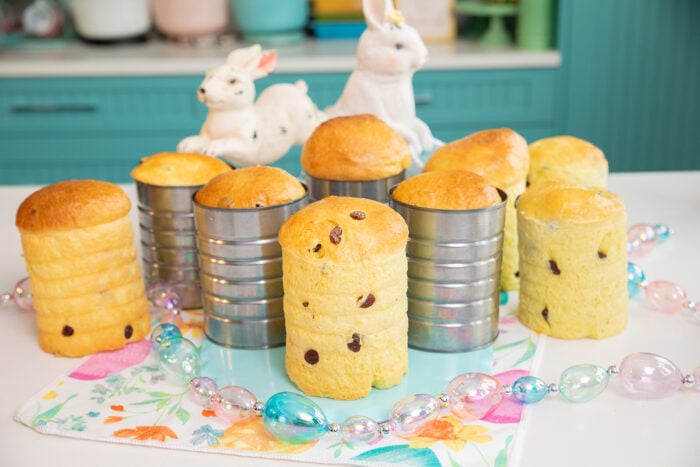
- Babka is a light, buttery, slightly sweet yeast bread with raisins that is traditionally baked in coffee tins. This recipe takes hours to make, so plan accordingly.
- My family has passed down this traditional Ukrainian Babka (Easter bread) recipe for generations. We bake it every Easter.
- This can also be baked in loaf pans if you don’t have a stash of coffee tins.
Is This Babka or Paska?
This recipe is called Babka by mainly Canadian Prairie Ukrainian settlers, as it has been argued (as you can read in the comments!) that this is Paska. Now, here on the Prairies, my Mom and Baba swore up and down that actual Paska is not a sweet bread, is braided, and has no raisins.
Here on the Prairies, we tend to have our own little culture when it comes to being Ukrainians. We pronounce kielbasa as ” koooo-basa” – which is the ONLY place that it’s pronounced like that! Isn’t that strange? It’s a uniquely Canadian prairie version of saying the word; however, with our huge population of Ukrainian settlers, it’s no less authentic, just as calling this Babka is no less authentic. Ways and words were changed when my ancestors arrived here and adapted to a new life.
Ingredient Tips You Need to Know
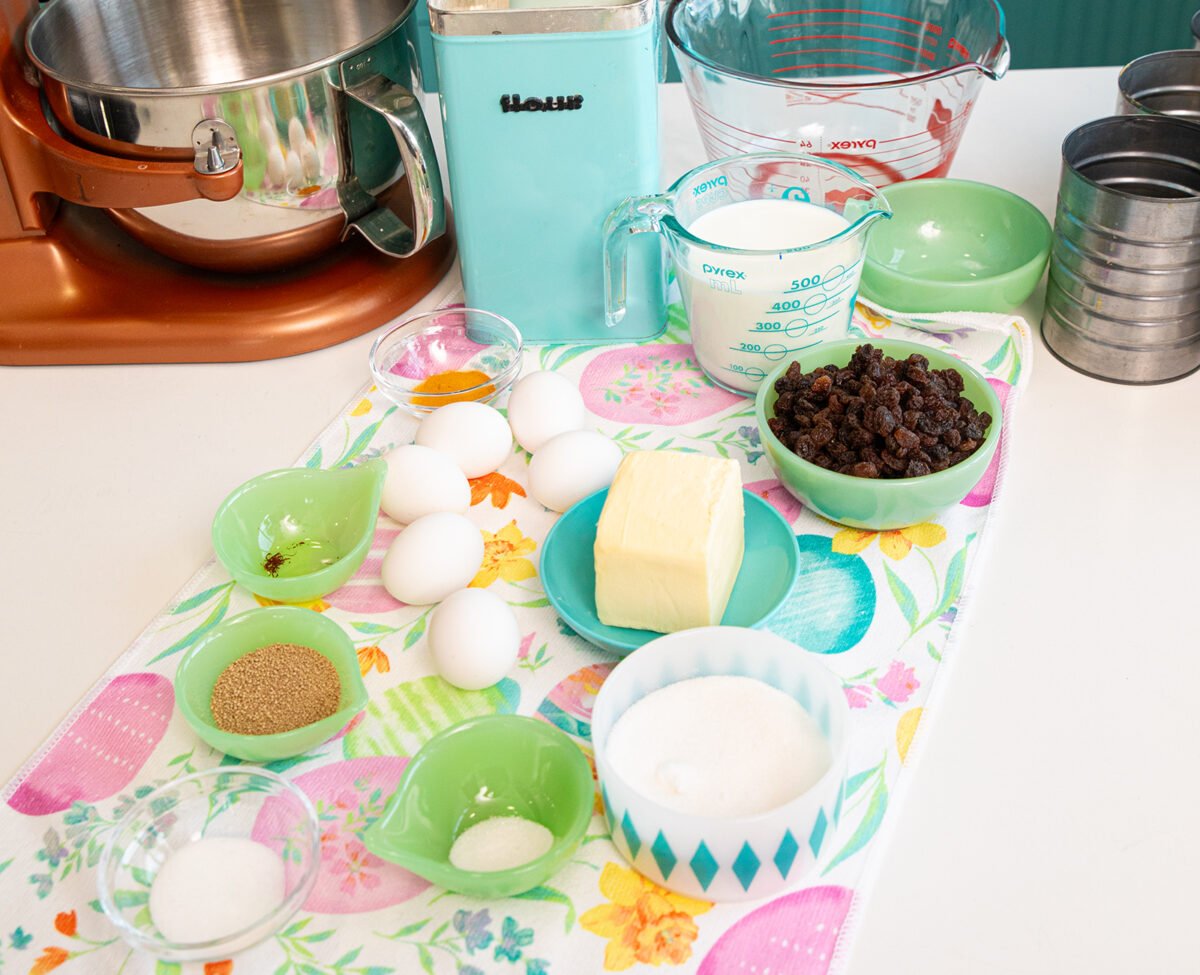
- Butter -the better quality your butter is, the better the babka will taste. If you use salted butter, omit 1 teaspoon of the salt in the recipe.
- Milk: whole milk is the best milk to use in this recipe.
- Granulated Sugar: do not use any other type of sugar in this bread.
- Traditional Yeast: you can only use traditional yeast in this recipe.
- Egg Yolks: using only egg yolks is what makes this bread so rich
- Saffron or Turmeric: saffron is traditional. However, turmeric can be used in a pinch to color the bread.
- All-Purpose Flour – Do not use bread or pastry flour
- Raisins: Thompson raisins are the best in this
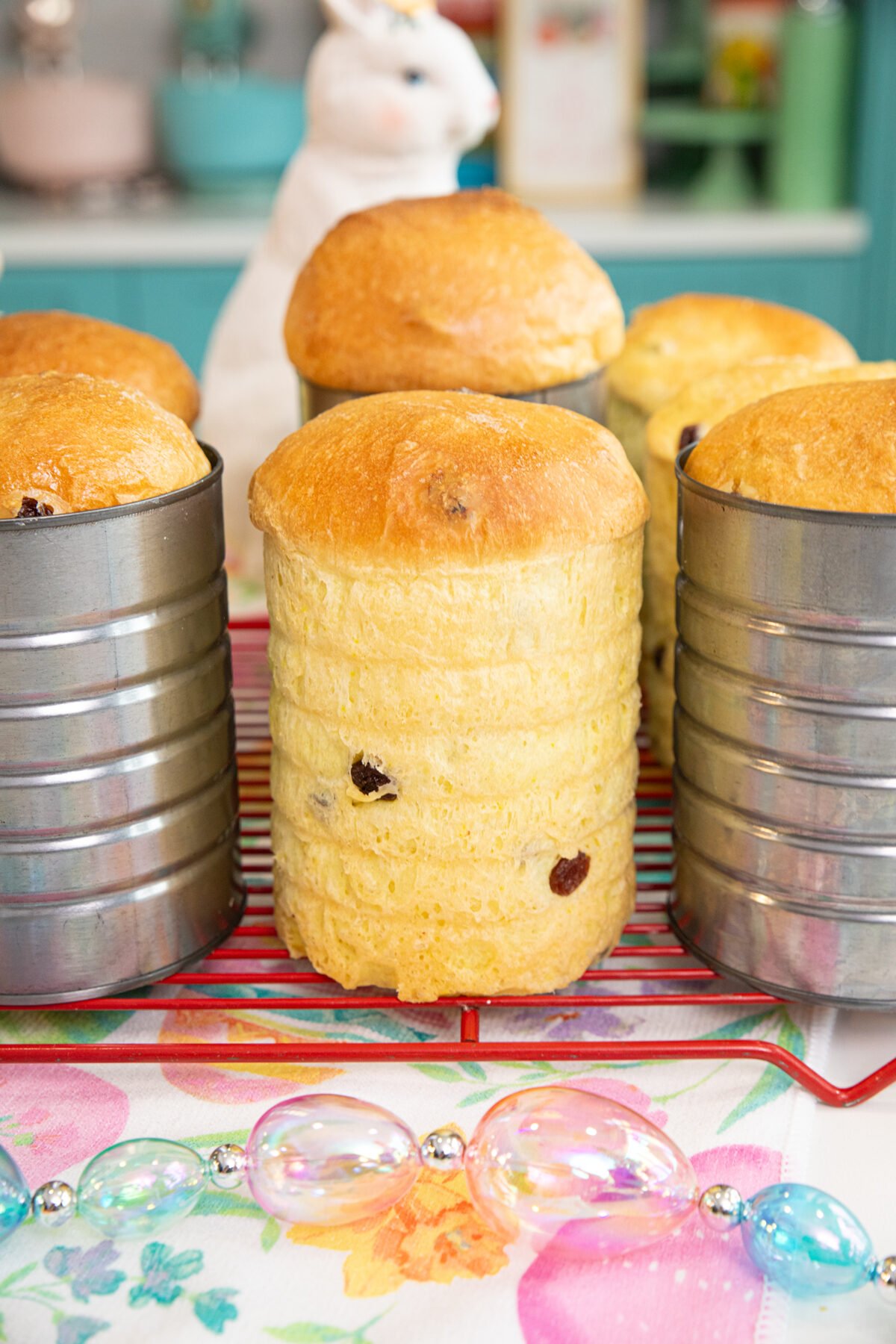

Baba’s Secret to Making the BEST Easter Bread is Scalded Milk
My Grandma’s recipe is different than most for Babka. She was an excellent baker and knew the secret for a fabulous bread: scalded milk!
Scalding milk changes the whey protein in it, making it a better food for yeast. This means that with a yeast-based bread recipe like Babka, you get faster proofing, a larger volume, and lighter, airy bread.
To scald the milk you heat it until it is steaming, but not boiling.
Baking Notes For Success
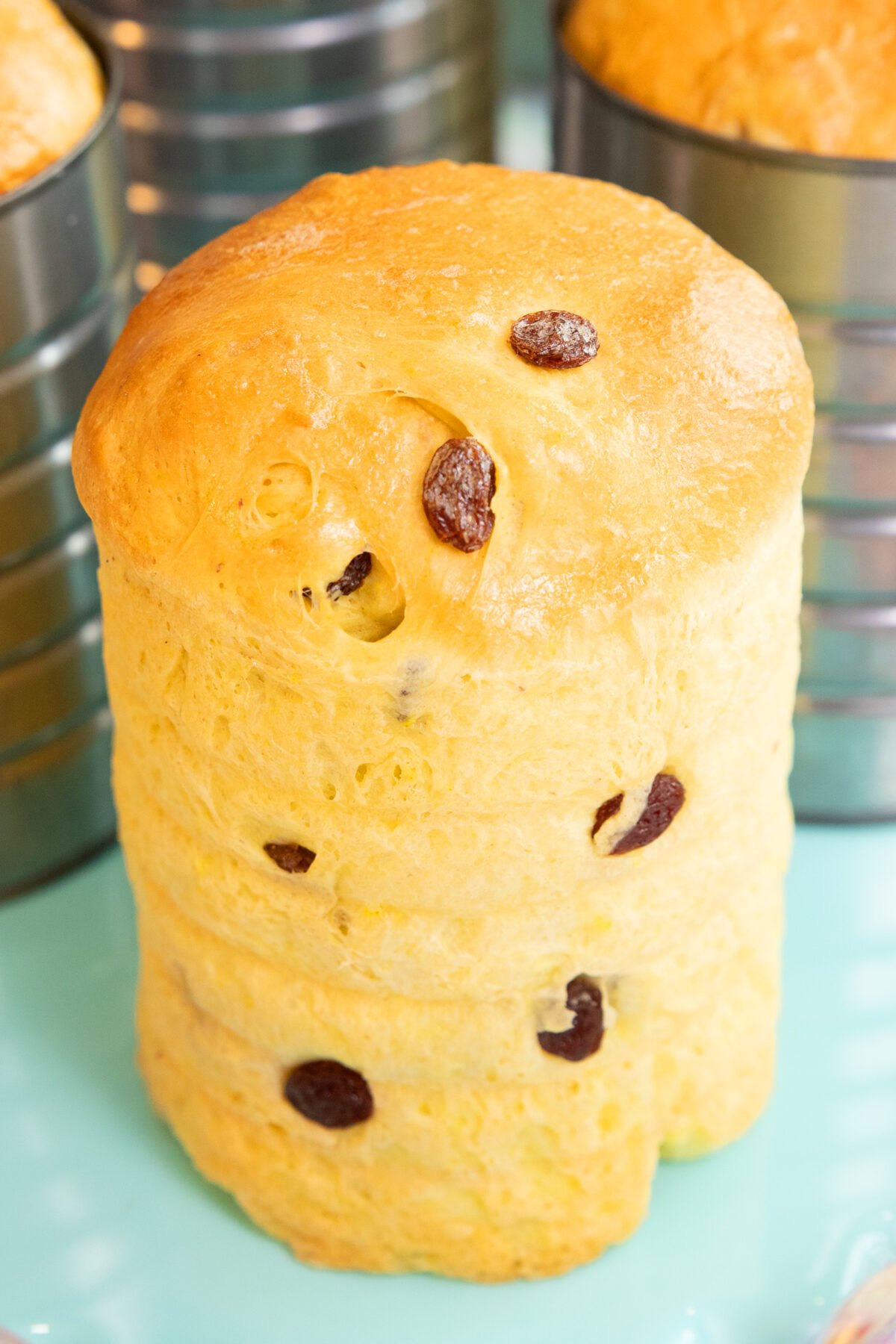
- No matter what size of tin or baking pan you use, the trick for this bread is that you only fill it one-third of the way with the dough. This dough is so light and airy it will triple in size and fill the container. This works in loaf pans and other sizes of coffee or soup tins.
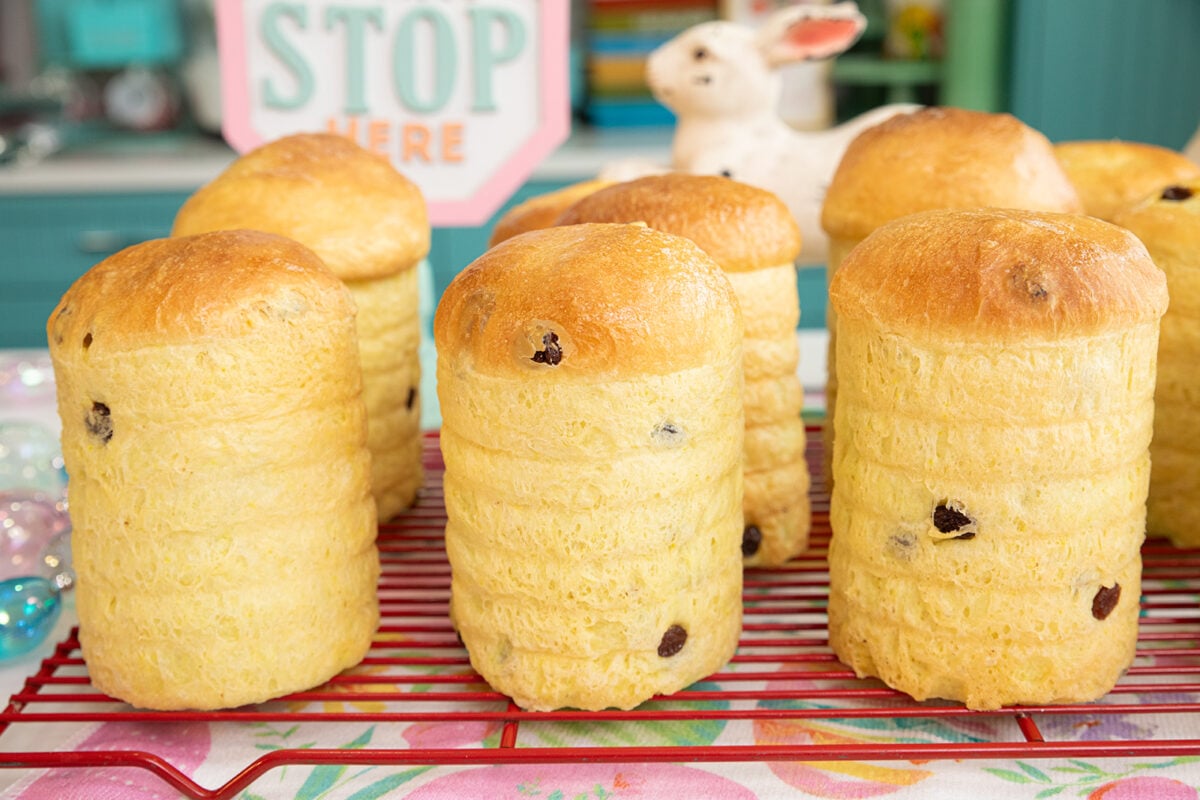
- Generously butter (not spray or anything else) the coffee cans, and your bread will never stick inside. You don’t have to use a knife to release it; simply shake it slightly from side to side, and it will loosen and release.
- You have to remove the Easter bread from the tins 5 minutes after you remove them from the oven. The tins will still be hot, so use oven mitts. If you don’t, the bread will become soggy.
- Watch my long video for help; I go through it step-by-step.
Happy Baking and Happy Easter, you guys! I am so excited to share this recipe with you. It’s our family tradition, and I’m thrilled you can also bake it! Make sure to allot an entire day for baking and watch the full video as well.
Love,
Karlynn
More Delicious Easter Recipes

Easter Bread (Ukrainian Babka)
Video

Equipment
- 10 medium coffee tins
- 5 bread pans
Ingredients
Scalded Milk Mixture
- 1 cup butter, see notes
- 2 cups whole milk
- ¾ cup granulated sugar
- ½ teaspoon saffron, or turmeric
- 6 large egg yolks, beaten – reserve some of the egg white for brushing tops
- 2 teaspoons salt
- 1 cup ice water, ( I add ice)
Yeast Mixture
- ½ cup water, very warm
- 1 teaspoon granulated sugar
- 2 tablespoons traditional yeast
Dry Ingredients
- 8-9 cups all-purpose flour
- 2 cups Thompson raisins
Instructions
Prepare the Scalded Milk Mixture
- Place the butter, whole milk, and ¾ cup of white sugar in a small saucepan. Heat the mixture over medium-high heat until the butter and sugar are dissolved. To scald the milk, continue to heat the mixture until the milk is steaming, then remove from the heat. Do not let it boil. You can also do this in the microwave (my Mom's trick) in a large glass microwave-safe measuring cup.
- Add in the saffron or the turmeric and stir to dissolve. Once the color has leeched from the saffron you can remove the threads if they aren't dissolved.
- Stir in the cup of ice water and let the mixture cool.
- Once cooled, whisk the beaten egg yolks into the mixture. Stir in the salt.
Proof the Yeast
- In the mixing bowl of your stand mixer, place ½ cup of very warm water and 1 teaspoon of granulated sugar. Mix together, then add the yeast. Stir until the yeast starts to dissolve, then let sit until the entire mixture is bubbling.
Make the Dough
- Once the yeast has been proofed, pour the egg mixture into the mixing bowl. Attach your dough hook.
- Add in the first four cups of flour into the mixing bowl, and using the dough hook, mix on low until combined. Add in the raisins next and mix in.
- Add in the next 4 cups of flour, mixing in slowly with the dough hook. Add enough flour until the dough barely sticks to your hands, is pulling away from the sides of the bowl, and is starting to smooth out.
- Knead for another 5 minutes with the dough hook.
- Turn the dough out into a well-oiled large plastic bowl ( the largest Tupperware container is the perfect size for this) and cover with a damp, clean kitchen towel. Place in a warm place for an hour or until the dough has doubled in size.
- Once the dough is ready, punch it down into the bowl and knead it a few times to compress it again. Grease your coffee tins or bread pans thoroughly. Place a dough ball that fills approximately one-third of the coffee can, making sure that the smooth side of the dough ball faces up and any seams are in the bottom of the can. This made ten 300-gram dough balls for my ten coffee tins.
- Remove all the oven racks except the very bottom rack. Place the tins on the rack a couple of inches apart for airflow, and then cover them again with a damp kitchen towel.
- Once the dough has reached the top of the can – around 90 minutes for me sometimes – remove the towel, leave the bread in the oven, and preheat your oven to 325℉.
- For the coffee tins, bake for 25 minutes, placing aluminum foil on top when the tops start to get too brown – they always will after a mere few minutes in the oven. Remove the foil and brush some of the leftover beaten egg white on top of the loaves. Continue to bake for another 10-15 minutes. The bread will sound hollow when tapped and be a dark brown on top when done.
- If they stick slightly in the tins, twist and shake gently at the same time, they will pop right out. If they stick in the loaf pans, run a knife along the edge to free the bread then remove safely.
- Cool on the baking racks completely, then store in airtight containers or bags at room temperature for up to 3 days, or freeze for up to 3 months.
Notes

Nutrition
Nutrition information is automatically calculated, so should only be used as an approximation.

Pin This To Your EASTER BAKING Board, and Remember to FOLLOW ME ON PINTEREST!







joanne says
How many loaf pans would be needed for this recipe if cans are not available?
Katrena says
My Baba settled in Brisbane, Australia and sausage was also koobasa, never kielbasa. We also call pierogi, varenyky. When my husband and I went to Europe, I literally had no idea what pierogi were until we were in Poland and we walked past a store making them.
Dianne L Singleton says
This recipe is so similar to our Polish Easter Bread recipe. Our egg count is 4 whole eggs and NO tumeric, no ice water. I let mine rise twice before I put in pans to rise the third time. makes huge difference. The second rising I add just a but more flour to feed it more to rise more. My question to you is – You don;t shape the dough? you just throw it in the pans?
Alexis says
I made this but I didn’t get the classic poof on the top. What do you think went wrong? Did I not wait long enough the second round of rising?
Sharon says
714 calories per slice?
Aimee says
Is it possible to use the large tomato cans? Or would they be to small I’d really like to try the canned method but have no coffee tins.
Margo Haynes says
Sort of disappointed because I had to use loaf pans! Here in the U.S. I haven’t seen coffee in a can in about 20 years.
Recipe really rates more than 5 stars! thanks for sharing!
Karlynn says
The metal Coffee cans are so hard to find now!
Nancy Dykman says
I used large tins from tomatoes (28oz) as I like to gift the loaves to single friends.
Angela says
I like vex baba bread. Thank you so much for your post the bread looks delicious. I use parchment paper in my tins. The bread goes straight up instead of ballooning over the tin & I have never had a problem with the bread sticking in the ridges. Also I cut out a circle for the bottom.
B says
I would be careful what cans are used, most cans have a coating on the inside that really wouldn’t be good to bake in. BHT, BPA, BHA are all readily found in the coating inside of cans…the lining reduces a metallic taste amongst other things. Cooking in a can that has a plastic coatingnis a really bad idea, a really bad, toxic idea. So just be aware of the can you use!
The bread is beautiful! I love the history of my Canadian heritage! I had no idea that the spelling of “perogy” was anything but “perogy”!!! So fun to learn something new!
Thank you!
Kathy says
This is an amazing paska recipe! Every Easter I would look forward to my baba’s paska. Now, at 101 years old, my baba has passed this yearly task on to me. While my baba’s recipe is great, I find her method a little too labour intensive and have tried several other recipes, none of which compare to my baba’s. I have to say that this recipe, while not only easy and straightforward, produces paska that is as good as (if not better) than my baba’s. When I shared a loaf with my baba, she was very impressed with the flavour and texture….you know a recipe is good when it is “baba approved!” Thank you, for sharing this recipe!!
Sherry Scott says
I followed your very detailed recipe, step by step, and made paska bread for the very first time. It turned out great and I think it will be a new family tradition. Thank you for the recipe and great details!
Alvin Knoll says
Hello and Happy Easter, just read your recipe and must comment, we are from Saskatchewan, Canada and there are lots of Germans out here, We also make this easter bread and call it PASKA. A little different take is that we soak our raisins in rum overnight and this gives it a little extra flavour. Other wise looks the same as we make, can’t beat the Easter Bread.
Lindsey says
Any thoughts on doing one of the rides overnight in the fridge?
Elmer Gawryletz says
I cut your recipe in half because of not having enough cans and turned out super good, will be baking more and I also line my cans with parchment paper, the loaves slide right out nicely, not sure if the parchment would affect the baking or not. Very good recipe, thank you !!
Michael says
Moved from Chicago to Philadelphia in 1994. Havent had proper (my mom’s) babka since then. Unfortunately she passed away in 2014, and did not leave recipe, but seeing that you baked the babka in a coffee can like she did, that’s one plus for you. Another is correct pronunciation of kielbasa (koo ba sa, take note people!!). Third plus, i have Ukrainian friends from Winnipeg, so i know i can trust you when you speak of Canadian Ukrainians on the prairie. Looking forward to trying your recipe!
Karlynn says
Well, I was born in Winnipeg, so I have some ‘Peg Street cred lol. Both sides of my family hail from Dauphin, Manitoba. This is absolutely a traditional Babka recipe and I hope it’s really close to your Mom’s!
I
Kooooonasa for the win!
Happy Easter!
Vicky Brooks says
My son’s girlfriend is Ukrainian and I would like to try and make this for her. I’ve made bread before in the past and didn’t do well. Is this recipe hard for a beginner like me and can I cut this recipe in half.
Thanks
Vicky
Karlynn Johnston says
This is a pretty easy and forgiving bread recipe and yes, you can cut it in half!
Erin | Dinners,Dishes and Dessert says
My family definitely love this!
Katerina @ diethood .com says
I have made something similar to this and it tastes amaaazing!!
Jacque Hastert says
Thanks for sharing this recipes. I will have to attempt to make it for Easter!
Paula - bell'alimento says
Love having this toasted! SO good.
Nutmeg Nanny says
Perfect for Easter! Thanks for this!
Krista says
This looks so good! I am going to have to try it this Easter!
Mary P Hoffman says
A woman in my building bakes babka as a fundraiser for the Leukemia & Lymphoma Society – at Easter and Christmas. They’re great!
The Kitchen Magpie says
It’s my favourite bread!
Cathy Wehage says
OH this is my favourite bread, my mom still makes it. Mmmmm
Jodi Flatt says
OMG, toasted with warm peanut butter. ….it’s my Easter breakfast treat….
The Kitchen Magpie says
Yes! Toasted is the best!
Jodi-Marie Lockyer says
One of the very few traditional recipes I make every year for Easter! I use saffron instead of turmeric and no raisins.
Gloria Duggan says
OMG I so remember my mom and baba doing this!!
Carol Turton says
I really am going to try to make this Babka, hope it turns out just like yours Karlyn.
Saylor McLennan says
You know, the sad thing is, those metal cans are really difficult to come across now… Unfortunate because they’re useful for so many things; including cooking.
The Kitchen Magpie says
Oh yes, we hoard them if we find them!
Highlander1 says
I am intewrested in all Ukrainian recipes.
Louise Mabey says
Where is it. I want some
Diane Sironovic-Dye says
Looks so good.