
This post may contain affiliate links. Please read our privacy policy for additional information.
Why You’ll Love My Recipe
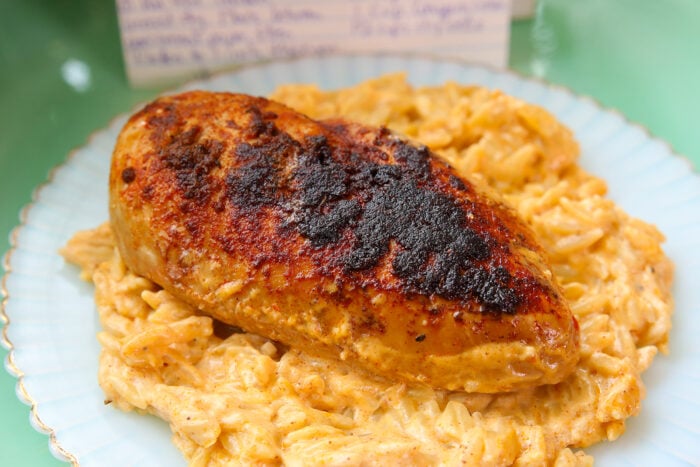
This homemade blackening seasoning is so easy to make and customize to your own liking. We have been using this for about a year now, so it’s well-tested and loved by my family! This can be used on skinless and skin-on chicken.
Blackening or Blackened Seasoning
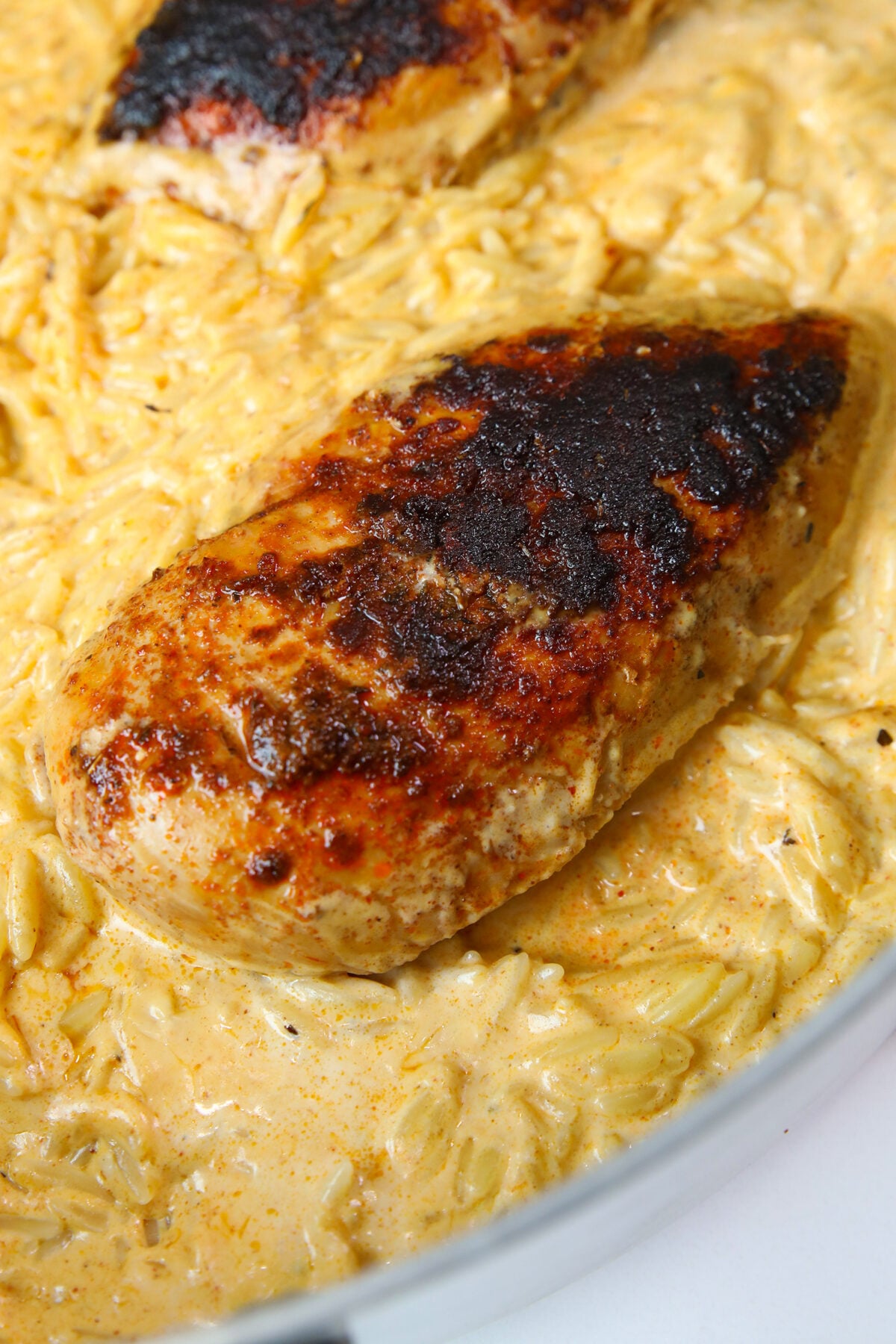
Blackening seasoning is a mixture of spices that is used in cooking to create a dark or “black” crust on meat. You have probably seen it used on chicken to give the chicken skin a crispy, deeply seasoned crust, and it’s common in many restaurants. It starts with a base of ground paprika, then you add in the assorted spices and salt.
The best part about this seasoning is that you can adjust the amounts of the different spices and create a blackening seasoning that is perfect for your palate.

Tried and Tested by My Own Family!
We have been using this seasoning on boneless chicken breasts for the past year or two for a change of pace, now that my daughter is enjoying more seasoned foods as an adult. (Note for parents of selective eaters – it DOES get better!)
This seasoning also happens to be on my favorite chicken dish at Earls restaurant as well, which inspired me to make my own blackening seasoning at home so that we could make blackened chicken whenever we want.
Karlynn’s Recipe Notes
- Skill Level: This is simply just combining spices, making it very easy.
- Total Time: Total time is about 5 minutes.
- Variations:
- To reduce the heat level of this spice, leave out the cayenne pepper and even the white and black peppers if you want. The main flavors will remain and will be amazing when used in your recipe.
- The amount of cayenne that I use gives it a nice heat, but if you don’t have selective eaters in your house, you can add more cayenne to the mixture.
- Don’t skip the smoked paprika; it adds so much depth of flavor to this spice mix.
Ingredients in My Blackening Seasoning
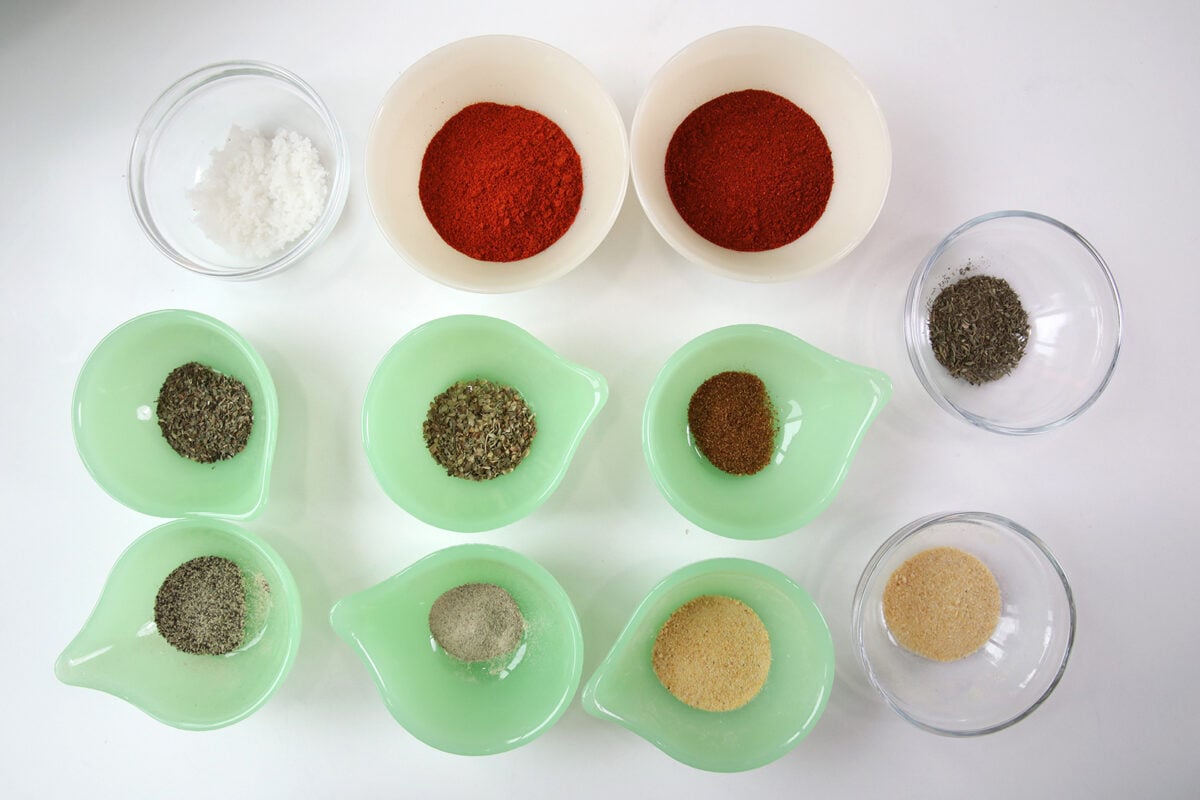
My preferred spices for my own seasoning use two types of paprika, and I also add in some white pepper, as I do in my homemade Cajun seasoning recipe.
- ¼ cup sweet paprika
- ¼ cup smoked paprika
- 2 teaspoons sea salt
- 1 teaspoon onion powder
- 1 teaspoon garlic powder
- 1 teaspoon dried basil leaves
- 1 teaspoon dried thyme leaves
- 1 teaspoon dried oregano leaves
- ¾ teaspoon ground white pepper
- ¾ teaspoon ground black pepper
- ½ teaspoon ground cayenne pepper
How to Make Blackened Seasoning
Simply combine the spices above (with any variations you wish to make) into a spice container and label it clearly. You can then keep it in the spice cupboard for future seasoning without having to prepare it every time!
How To Use Blackening Seasoning
This seasoning works on salmon, shrimp, chicken – you name the protein, you can try this seasoning on it.
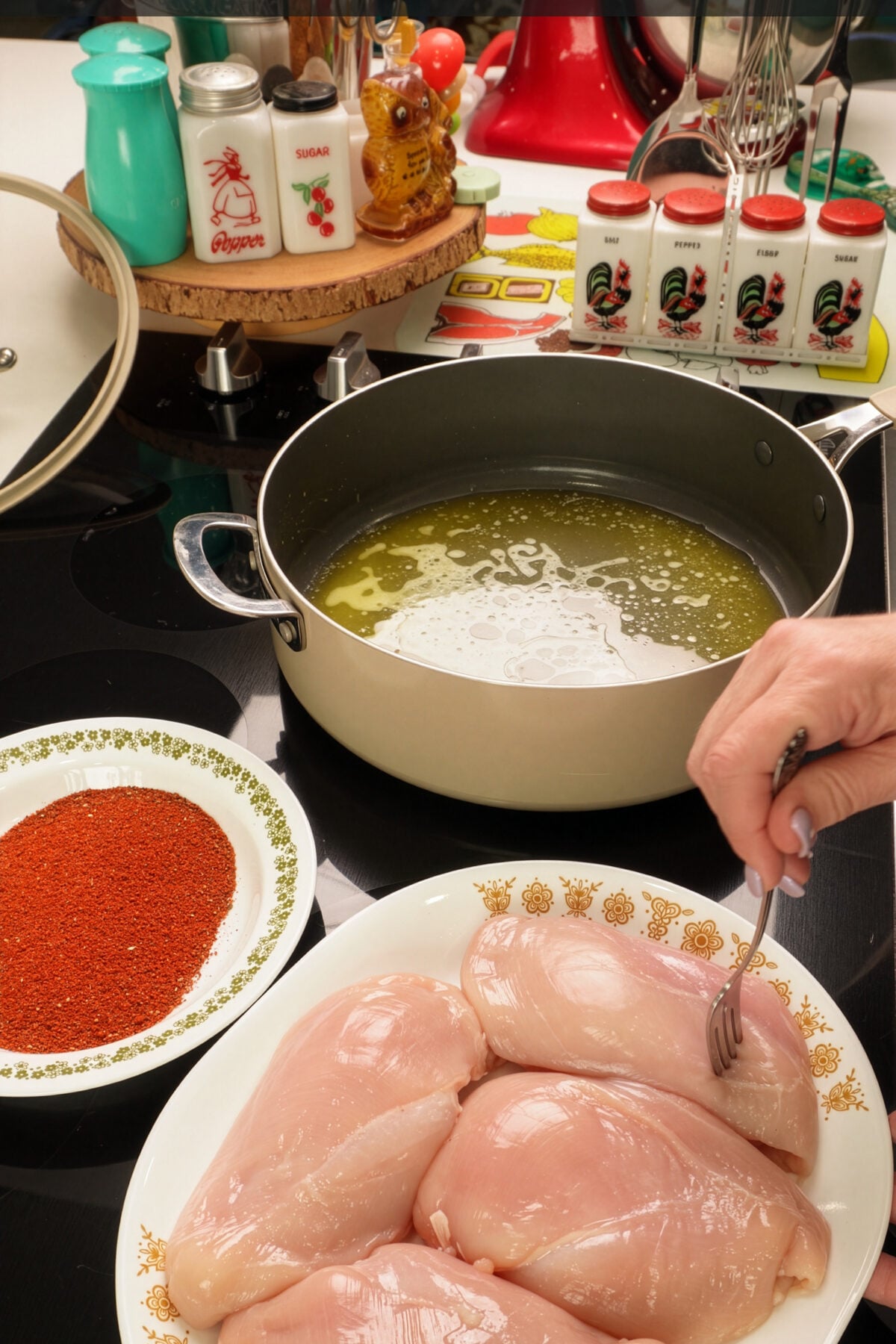
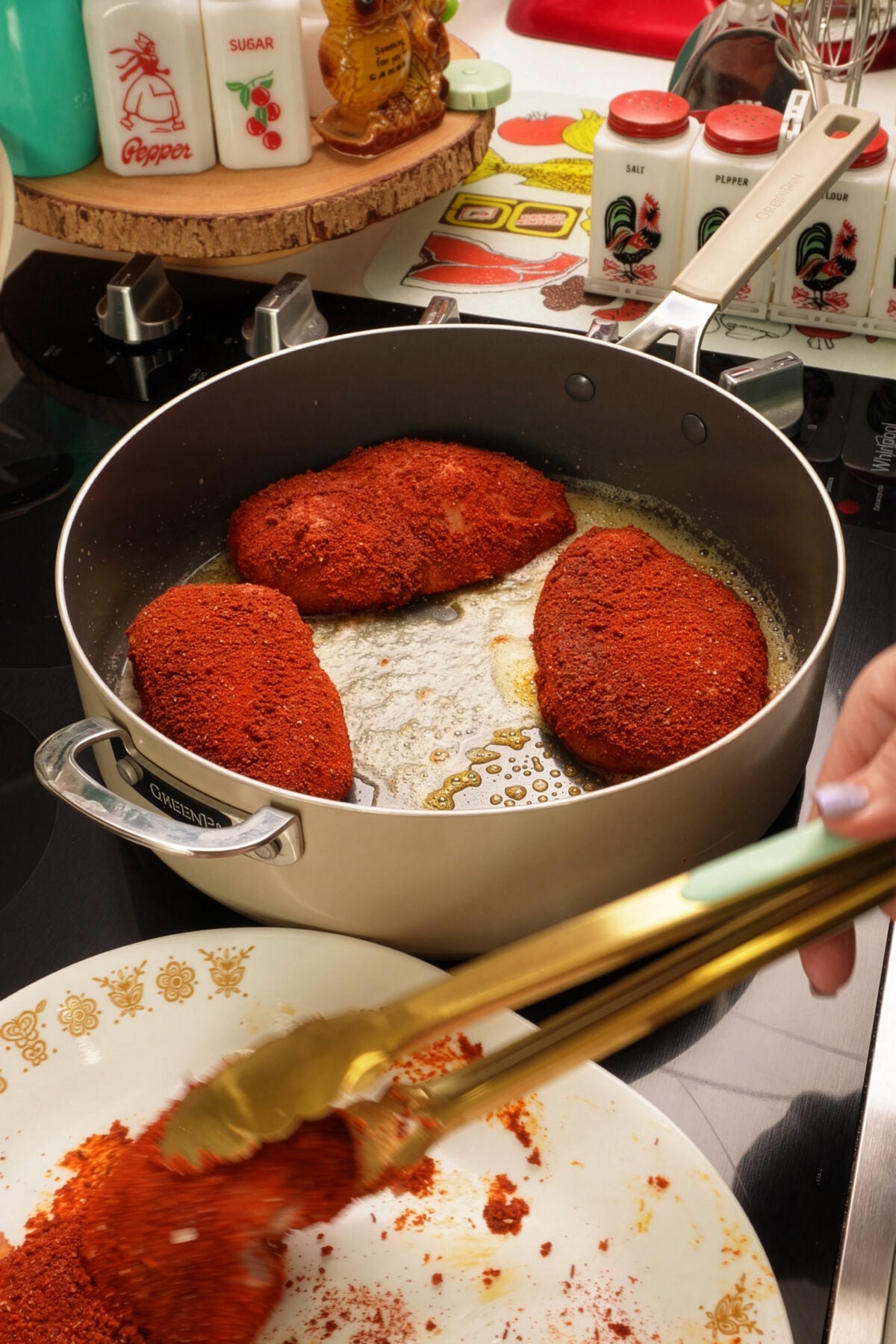
- Place your seasoning mix on a medium-sized plate.
- Melt butter in a large skillet over medium heat.
- Dredge your protein (I am using chicken breasts this time around) in the melted butter until it’s covered.
- Place the protein on the plate of spice, flipping sides to coat each side of the meat with the spice.
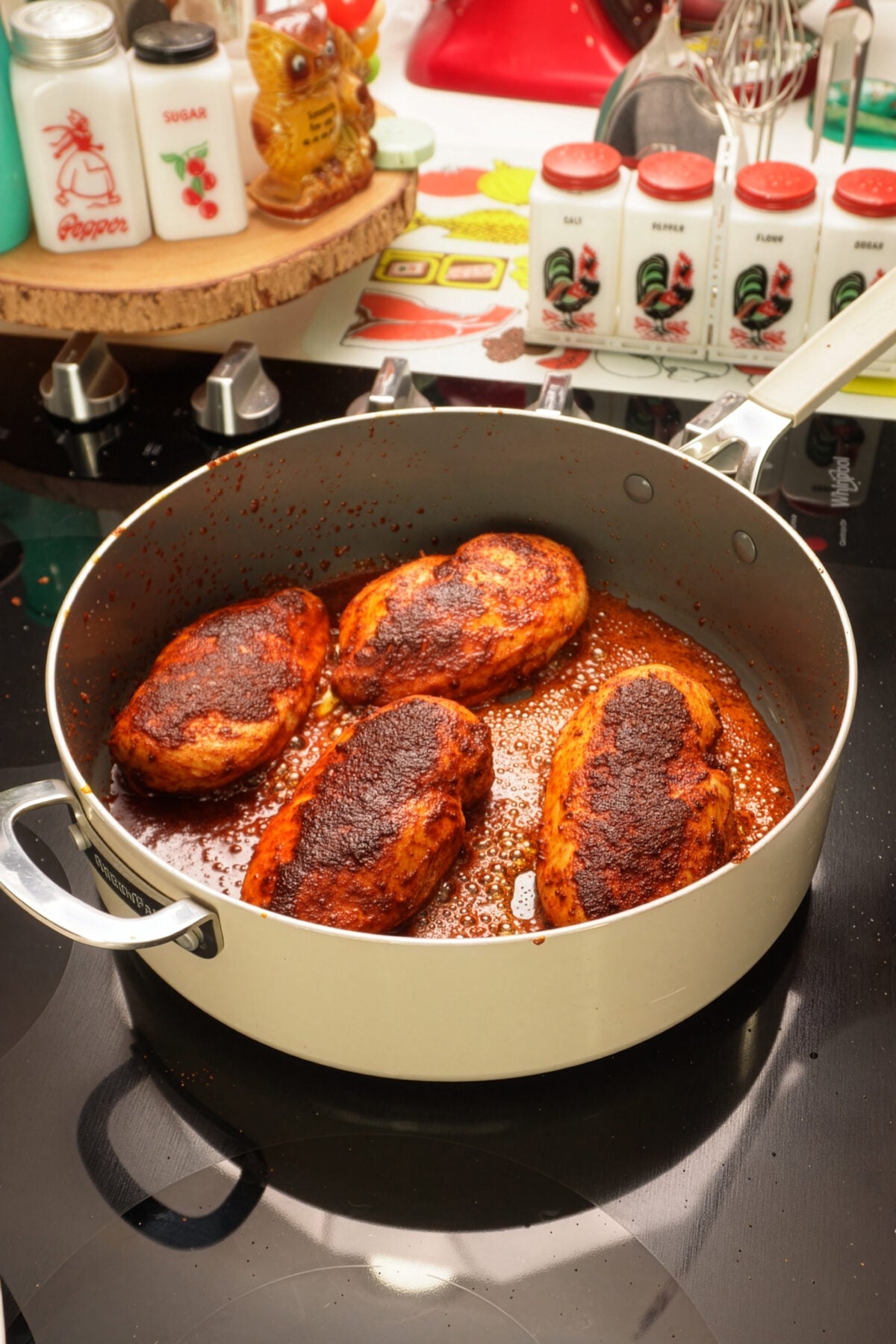
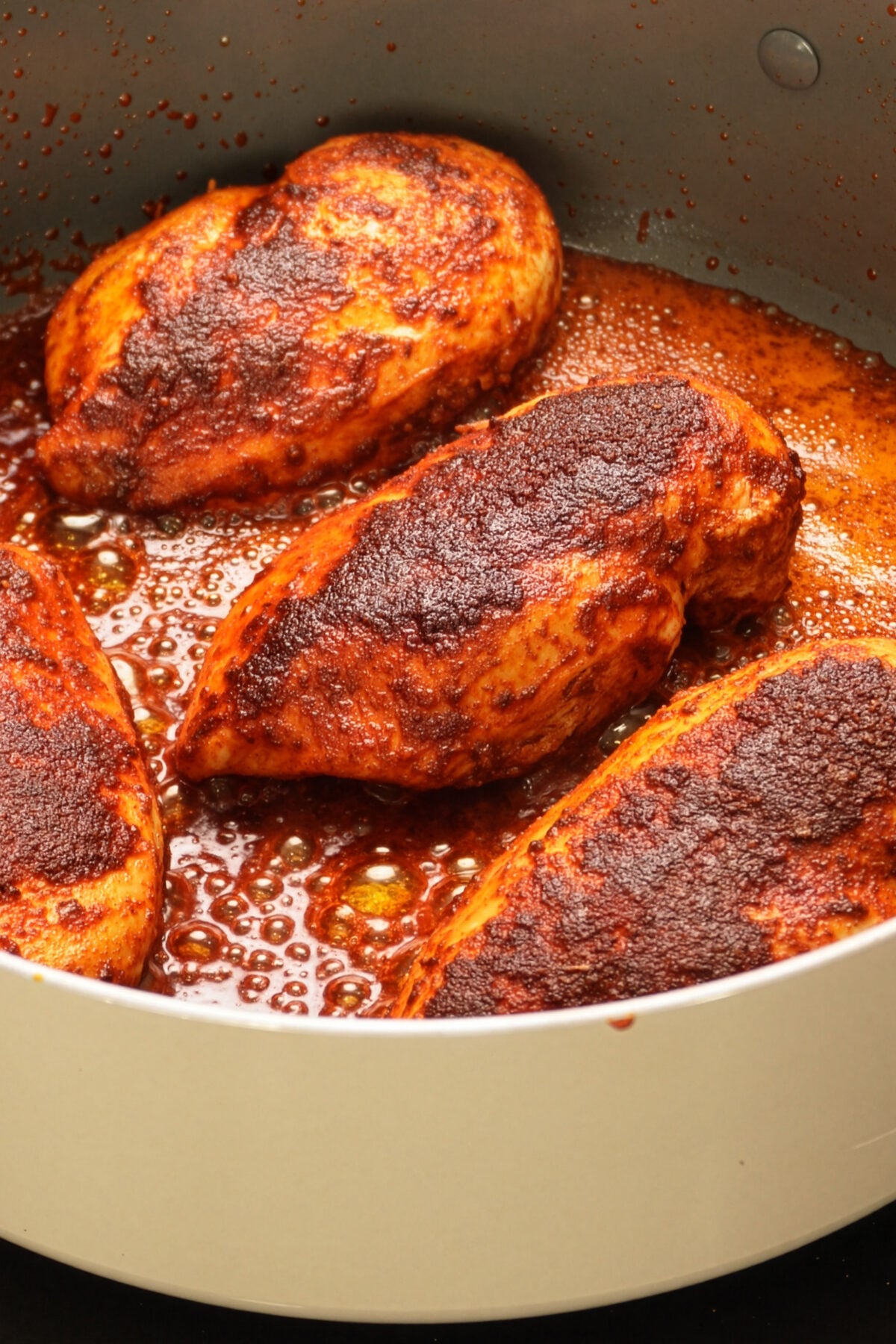
- Return to the pan and turn the heat up to medium-high. Saute the protein in the butter until each side of the protein has the spice “blackened” up and the protein is cooked to the correct temperature.
- Remove and serve.
Storage Instructions
Store in an airtight container in the cupboard for up to 6 months. Just be sure to label it so you remember what it is!
Enjoy!
Karlynn
Homemade Blackening Seasoning Recipe
Ingredients
- ¼ cup sweet paprika
- ¼ cup smoked paprika
- 2 teaspoons sea salt
- 1 teaspoon onion powder
- 1 teaspoon garlic powder
- 1 teaspoon dried basil leaves
- 1 teaspoon dried thyme leaves
- 1 teaspoon dried oregano leaves
- ¾ teaspoon ground white pepper
- ¾ teaspoon ground black pepper
- ½ teaspoon ground cayenne pepper, to start
Instructions
- Whisk together all of the ingredients in a medium-sized bowl. Adjust the amount of cayenne pepper to your liking, as this is where the "heat" of the spice mixture comes from.
- Store in an airtight lidded container in a cool, dark place.
Notes
- You can adjust the seasoning amounts to your liking, but I highly suggest making sure you use both types of paprika!

Nutrition
Nutrition information is automatically calculated, so should only be used as an approximation.








Leave a Comment or Recipe Tip