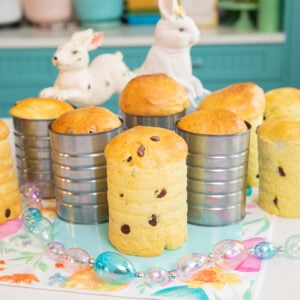
Easter Bread (Ukrainian Babka)
How to make traditional Ukrainian Babka, also called Easter bread. This is my family's treasured recipe that has been passed down through many generations of bakers.
Servings: 10 loaves
Calories: 737kcal
Equipment
- 10 medium coffee tins
- 5 bread pans
Ingredients
Scalded Milk Mixture
- 1 cup butter see notes
- 2 cups whole milk
- ¾ cup granulated sugar
- ½ teaspoon saffron or turmeric
- 6 large egg yolks beaten - reserve some of the egg white for brushing tops
- 2 teaspoons salt
- 1 cup ice water ( I add ice)
Yeast Mixture
- ½ cup water very warm
- 1 teaspoon granulated sugar
- 2 tablespoons traditional yeast
Dry Ingredients
- 8-9 cups all-purpose flour
- 2 cups Thompson raisins
Instructions
Prepare the Scalded Milk Mixture
- Place the butter, whole milk, and ¾ cup of white sugar in a small saucepan. Heat the mixture over medium-high heat until the butter and sugar are dissolved. To scald the milk, continue to heat the mixture until the milk is steaming, then remove from the heat. Do not let it boil. You can also do this in the microwave (my Mom's trick) in a large glass microwave-safe measuring cup.
- Add in the saffron or the turmeric and stir to dissolve. Once the color has leeched from the saffron you can remove the threads if they aren't dissolved.
- Stir in the cup of ice water and let the mixture cool.
- Once cooled, whisk the beaten egg yolks into the mixture. Stir in the salt.
Proof the Yeast
- In the mixing bowl of your stand mixer, place ½ cup of very warm water and 1 teaspoon of granulated sugar. Mix together, then add the yeast. Stir until the yeast starts to dissolve, then let sit until the entire mixture is bubbling.
Make the Dough
- Once the yeast has been proofed, pour the egg mixture into the mixing bowl. Attach your dough hook.
- Add in the first four cups of flour into the mixing bowl, and using the dough hook, mix on low until combined. Add in the raisins next and mix in.
- Add in the next 4 cups of flour, mixing in slowly with the dough hook. Add enough flour until the dough barely sticks to your hands, is pulling away from the sides of the bowl, and is starting to smooth out.
- Knead for another 5 minutes with the dough hook.
- Turn the dough out into a well-oiled large plastic bowl ( the largest Tupperware container is the perfect size for this) and cover with a damp, clean kitchen towel. Place in a warm place for an hour or until the dough has doubled in size.
- Once the dough is ready, punch it down into the bowl and knead it a few times to compress it again. Grease your coffee tins or bread pans thoroughly. Place a dough ball that fills approximately one-third of the coffee can, making sure that the smooth side of the dough ball faces up and any seams are in the bottom of the can. This made ten 300-gram dough balls for my ten coffee tins.
- Remove all the oven racks except the very bottom rack. Place the tins on the rack a couple of inches apart for airflow, and then cover them again with a damp kitchen towel.
- Once the dough has reached the top of the can - around 90 minutes for me sometimes - remove the towel, leave the bread in the oven, and preheat your oven to 325℉.
- For the coffee tins, bake for 25 minutes, placing aluminum foil on top when the tops start to get too brown - they always will after a mere few minutes in the oven. Remove the foil and brush some of the leftover beaten egg white on top of the loaves. Continue to bake for another 10-15 minutes. The bread will sound hollow when tapped and be a dark brown on top when done.
- If they stick slightly in the tins, twist and shake gently at the same time, they will pop right out. If they stick in the loaf pans, run a knife along the edge to free the bread then remove safely.
- Cool on the baking racks completely, then store in airtight containers or bags at room temperature for up to 3 days, or freeze for up to 3 months.
Video
Notes
Glaze the tops with my Buttery Icing Glaze if desired!
Nutrition
Serving: 1loaf | Calories: 737kcal | Carbohydrates: 117g | Protein: 15g | Fat: 24g | Saturated Fat: 14g | Polyunsaturated Fat: 2g | Monounsaturated Fat: 6g | Trans Fat: 1g | Cholesterol: 165mg | Sodium: 647mg | Potassium: 444mg | Fiber: 5g | Sugar: 18g | Vitamin A: 793IU | Vitamin C: 2mg | Calcium: 104mg | Iron: 6mg